
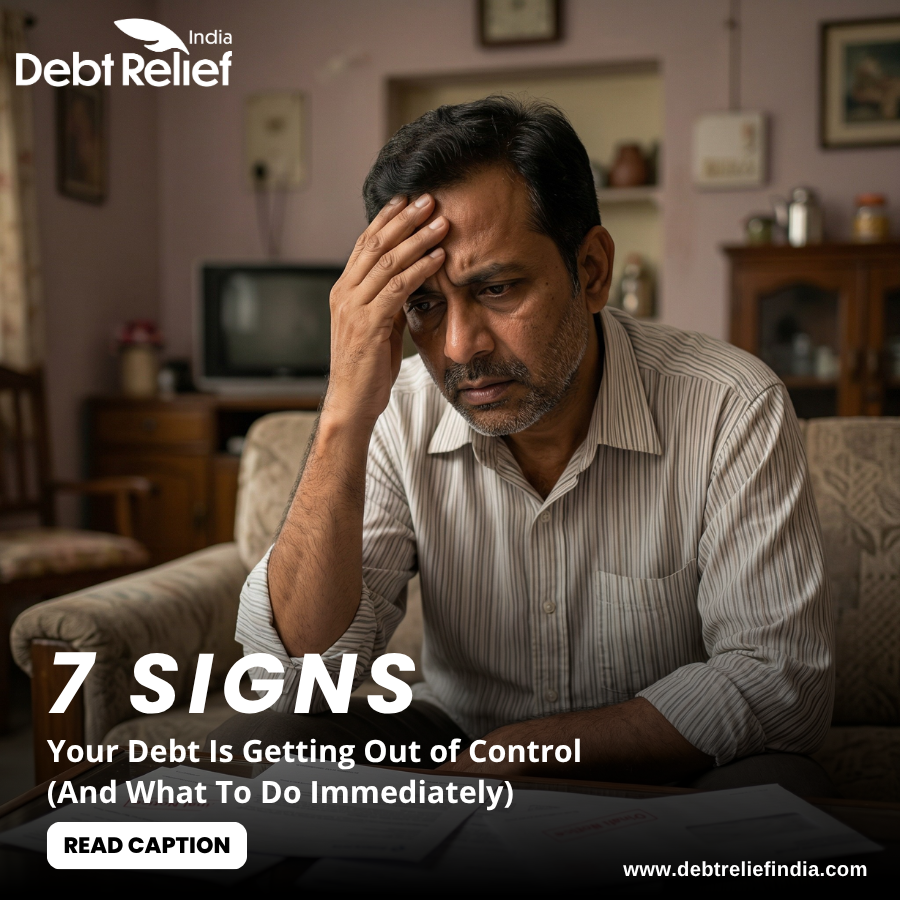
Debt rarely feels dangerous in the beginning.
It starts small. A credit card swipe. A personal loan for a need. An EMI that feels manageable.
But over time, something changes.
What once felt under control slowly starts creating pressure. And most people don’t realize they’re heading toward a serious problem until it becomes overwhelming.
The truth is, debt doesn’t become a crisis overnight.
It gives signals. Subtle ones.
If you know what to look for, you can act early and avoid long-term financial stress.
Here are the 7 Signs Your Debt Is Getting Out of Control
1. You’re Only Paying the Minimum Due
This is one of the biggest warning signs.
Paying just the minimum amount on your credit card may feel like you’re staying on track, but in reality, your debt is barely reducing. Interest keeps adding up, and your balance stays almost the same or even increases.
What to do:
Stop using the card immediately and start focusing on clearing the principal amount. If that feels difficult, explore structured repayment options.
2. You’re Using One Loan to Pay Another
If you’re taking a new loan or using another credit card just to pay existing dues, you’re not solving the problem — you’re delaying it.
This creates a cycle where debt keeps shifting, but never reduces.
What to do:
Pause and assess your total outstanding. Focus on reducing overall debt instead of juggling multiple sources.
3. Your Savings Are Constantly Going Down
If every month you’re dipping into your savings to manage EMIs or expenses, it’s a sign your income is no longer supporting your financial commitments.
Savings are meant for security, not survival.
What to do:
Re-evaluate your expenses and debt obligations. If savings are consistently shrinking, it’s time to restructure your approach.
4. You Feel Anxious About Bank Calls or Messages
When you start avoiding unknown calls or feel stressed seeing bank notifications, it’s no longer just a financial issue — it’s affecting your mental well-being.
This usually happens when payments are delayed or pressure is building.
What to do:
Don’t ignore communication. Early conversations with lenders often lead to better solutions than delayed responses.
5. Your Outstanding Amount Isn’t Reducing
Even after making regular payments, if your total debt remains almost the same, it means interest is working against you.
This is common with high-interest credit cards.
What to do:
Focus on high-interest debt first. Consider converting outstanding into lower-interest EMI options if available.
6. You’ve Started Missing Payments
Missing even one EMI or credit card payment can trigger penalties, increase interest, and impact your credit score.
If it’s happening more than once, the situation needs immediate attention.
What to do:
Prioritize essential payments and avoid letting delays pile up. Address the issue before it escalates.
7. You Keep Saying “I’ll Fix This Next Month”
This is the most dangerous sign.
Delaying action gives interest more time to grow and reduces your options over time. What could have been manageable today becomes overwhelming tomorrow.
What to do:
Take action now. Even small steps today are better than bigger problems later.
What Happens If You Ignore These Signs?
If left unaddressed, debt can lead to:
- Continuous interest accumulation
- Recovery calls and pressure
- Credit score damage
- Emotional and mental stress
Debt becomes harder to manage not because of the amount alone, but because of delay.
What You Should Do Immediately
If you relate to even 2–3 of these signs, don’t wait.
Start with:
- Listing all your debts clearly
- Identifying high-interest liabilities
- Reducing new credit usage
- Exploring repayment or restructuring options
And if your total debt feels unmanageable, understand that legal and structured solutions like debt settlement exist.
Final Thoughts
Debt is not a failure.
Ignoring it is what creates bigger problems.
The earlier you recognize the signs, the easier it is to regain control.
Because the goal is not just to pay off debt —
it’s to protect your peace of mind while doing it.