
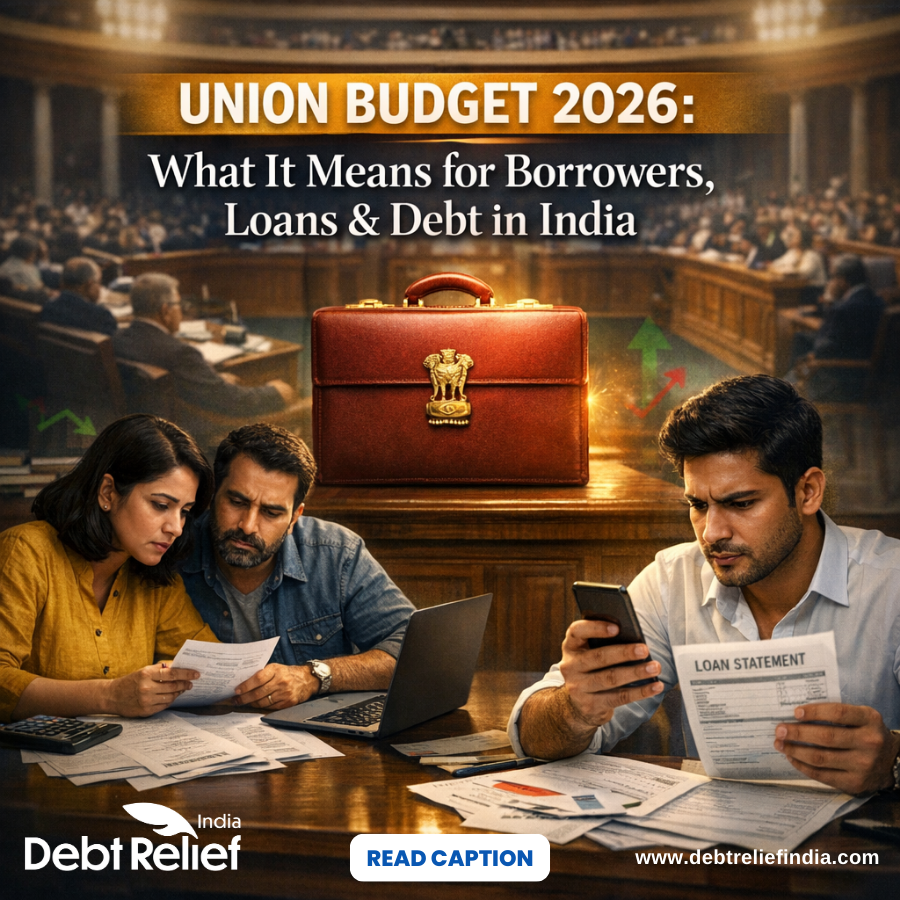
Every year, the Union Budget is discussed in terms of taxes, growth numbers, and big announcements.
But for millions of Indians, the real question is much simpler:
Will my financial stress reduce or increase?
For borrowers, people paying EMIs, or those already struggling with loans and credit card debt, the Union Budget 2026 carries indirect but very real consequences. Not all of them are obvious on day one, but their impact unfolds in the months that follow.
The Bigger Picture: Why Borrowers Should Care About the Budget
The Budget may not directly tell you how much EMI you’ll pay next month, but it shapes the environment in which lenders, banks, and recovery systems operate.
Budget decisions influence:
- How aggressively banks lend
- How cautious NBFCs become
- How much disposable income households retain
- How credit stress is handled when people default
In short, borrowers feel the Budget long after the headlines fade.
Income, Inflation & the EMI Reality
One of the most important borrower-side takeaways from Budget 2026 is the continued pressure on household finances.
Even when income tax relief or benefits are announced, inflation, rising living costs, healthcare expenses, and education fees often eat into any gains. For borrowers, this means:
- EMIs take up a larger share of monthly income
- Savings get used to manage short-term expenses
- Credit cards become the fallback for emergencies
This widening gap between income and expenses is one of the biggest reasons personal debt continues to rise in India.
Credit Availability: Easier Access, Higher Risk
Post-budget periods often see renewed lending activity. Banks and NBFCs adjust strategies, push new loan products, and expand digital credit offerings.
While easier access to credit can feel like relief, it comes with risks:
- Loans approved faster than people can assess affordability
- Credit cards issued without financial counselling
- “Short-term solutions” turning into long-term liabilities
For borrowers already stretched thin, taking fresh credit in this phase can quietly push them closer to a debt trap.
What Budget 2026 Signals for People Already in Debt
For individuals already struggling with repayments, the Budget indirectly affects how lenders behave.
Historically, post-budget phases often bring:
- Tighter recovery processes as lenders clean up balance sheets
- Increased follow-ups on overdue accounts
- Less flexibility for informal adjustments
This is where awareness becomes crucial. Many borrowers delay action, hoping things will improve on their own. Unfortunately, delay usually makes negotiations harder and stress heavier.
The Silent Impact on Mental Health
What rarely gets discussed during budget debates is the emotional cost.
Financial pressure doesn’t stay on paper. It shows up as:
- Anxiety around phone calls
- Sleep issues
- Strained family relationships
- Fear of legal notices or recovery visits
Budget announcements may focus on growth, but borrowers experience stress in very personal ways. And unless addressed early, this stress can spiral.
What Borrowers Should Do After Budget 2026
The months following the Budget are a critical window. This is the time to take control rather than wait for pressure to build.
If you have loans or credit card dues:
- Review your total debt honestly
- Check whether EMIs are sustainable with your current income
- Avoid taking new credit just to manage old credit
- Do not ignore early warning signs like missed payments
If repayment feels unmanageable, exploring legal and structured debt resolution options early is always better than reacting after harassment or legal escalation begins.
Budget Can Shape Policy — But Action Is Personal
Union Budget 2026 sets the tone for the economy, but it cannot solve individual debt stress on its own.
For borrowers, real relief comes from:
- Awareness of rights
- Timely action
- Ethical, legal negotiation when needed
- Support systems that prioritize dignity over pressure
At Debt Relief India, we believe budgets may change frameworks, but financial peace comes from informed decisions and early intervention.
Final Thoughts
Union Budget 2026 reminds us of one important truth:
Debt challenges in India are not just economic — they are human.
If you or someone you know is struggling with loans, EMIs, or recovery pressure, this is the right time to pause, assess, and act responsibly.
Because the best financial decision is not always about borrowing more —
sometimes, it’s about finding the right way out.